

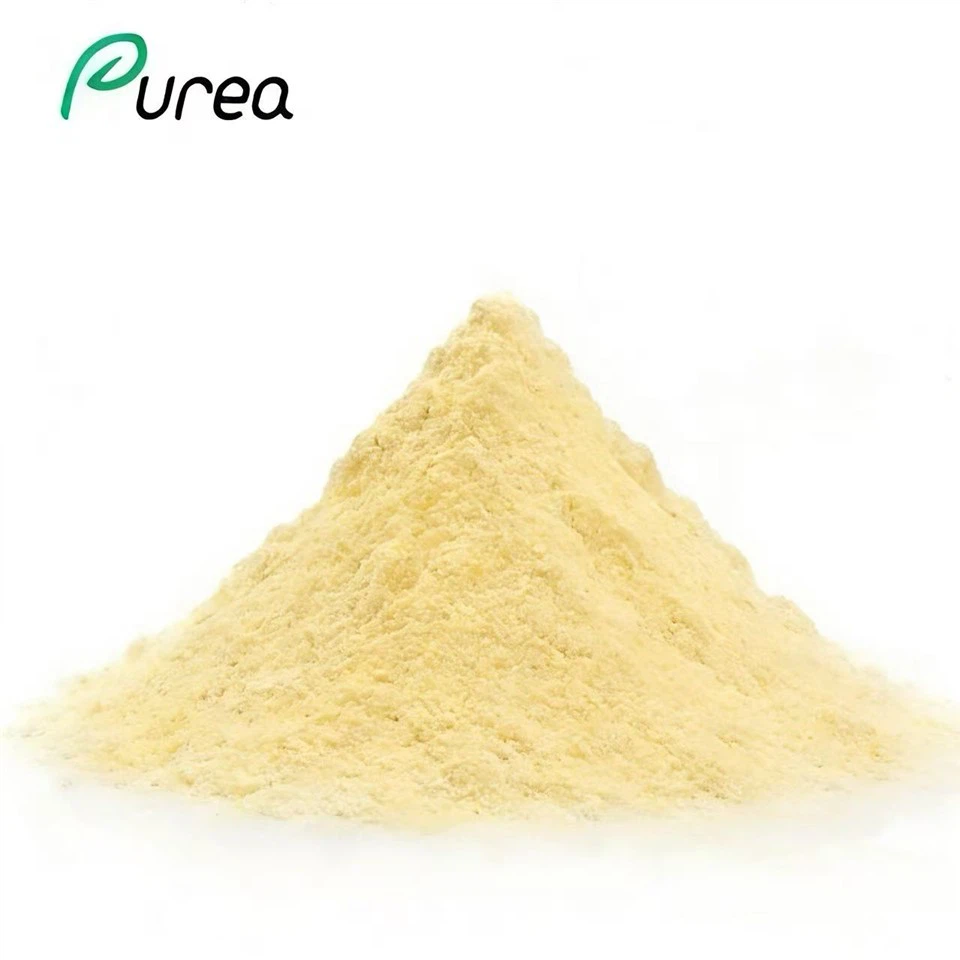
Selenium Enriched Yeast Powder is a food-grade nutritional ingredient produced by cultivating Saccharomyces cerevisiae in a selenium-enriched medium. Selenium is incorporated into the yeast biomass in organic forms. With a nominal selenium content of 2000 ppm, it is suitable for dietary supplements, nutritional premixes, and selected fortified food formulations.
Product Specifications
|
Parameter |
Specification |
|
Product Name |
Selenium Enriched Yeast Powder |
|
Selenium Content |
2000 ppm |
|
Protein Content |
≥ 45% |
|
Appearance |
Light Yellow Powder |
|
Identification |
Inactive yeast, no obvious foreign impurities |
|
Odor |
Characteristic |
|
Moisture |
≤ 6.0% |
|
Residue on Ignition |
≤ 8.0% |
|
Heavy Metals (as Pb) |
≤ 10.0 mg/kg |
|
Arsenic |
≤ 2.0 mg/kg |
|
Total Plate Count |
≤ 10,000 CFU/g |
|
E. coli |
Negative |
|
Pathogens |
Negative |
|
Grade |
Food Grade |
|
Certifications |
ISO, Halal, Kosher, HACCP |
|
Packaging |
1 kg/bag, 25 kg/drum |
|
MOQ |
1 kg |
|
Lead Time |
Approximately 2–3 weeks |
|
Shelf Life |
2 years |
Selenium Form & Composition
Selenomethionine: A major organic selenium compound commonly found in selenium-enriched yeast. Buyers requiring a defined content should confirm the available analytical data.
Other Selenium Compounds: Other compounds, such as selenocysteine, may also be present. Their proportions depend on the production process.
Yeast Matrix: Selenium is incorporated into yeast biomass containing proteins and other cellular components, distinguishing this ingredient from isolated selenium compounds.
Organic vs. Inorganic Selenium: Selenium-enriched yeast contains organic selenium forms, while inorganic salts provide selenium in inorganic forms. Selection depends on the target selenium level, formulation requirements, and destination-market regulations. Organic selenium refers to its chemical form, not organic certification.
Formulation Applications
Selenium Enriched Yeast Powder can be evaluated for use in nutritional products and selected fortified foods, subject to formulation and regulatory requirements.
Selenium Supplements
For formulations requiring a defined selenium source. Inclusion levels should be calculated using the batch-specific selenium assay.
Multivitamin and Mineral Formulations
Suitable for evaluation in combination products, with the total selenium contribution from all ingredients taken into account.
Nutritional Powders and Premixes
Can be considered for dry blends. Premixing and blending trials help assess ingredient distribution and uniformity.
Fortified Foods
May be evaluated for selected food applications after reviewing permitted use levels and destination-market regulations.
Selenium Dosage & Blend Development
Dosage Calculation: At a nominal concentration of 2000 ppm, each gram provides approximately 2 mg of selenium. A theoretical 50 mg of powder provides 100 μg of selenium. Final calculations should use the verified batch assay.
Premixing & Blending: Low inclusion levels require suitable mixing procedures to help achieve uniform selenium distribution throughout the formulation.
Finished Product Compliance: The total selenium content per serving should account for all ingredient contributions and comply with applicable market requirements.
Pilot-Scale Evaluation: Preliminary trials can help assess blending uniformity and processing suitability before commercial production.
OEM & Product Customization
Product requirements can be reviewed according to the intended formulation and order specifications.
Specification Matching
Confirm the selenium concentration and quality parameters required for the finished product.
Formula Development
Evaluate the target selenium level, serving size, dosage form, and ingredient compatibility.
Packaging & Orders
Standard packaging is 1 kg/bag and 25 kg/drum. MOQ is 1 kg, with an approximate lead time of 2–3 weeks.
Documentation
Confirm COA, technical specifications, certificates, and additional testing requirements before ordering.
Quality Control
Selenium & Physicochemical Testing: Selenium content, protein, moisture, residue on ignition, appearance, and identification are key parameters for evaluating the material against the product specification.
Contaminant & Microbiological Control: The specification includes limits for heavy metals, arsenic, and total plate count, as well as negative requirements for E. coli and pathogens. Buyers should confirm applicable test methods and batch results.
Batch Consistency: Batch-specific test results should be reviewed against the agreed specification during incoming inspection and repeat purchasing.
Certification Verification: The listed certifications include ISO, Halal, Kosher, and HACCP. Buyers should verify certificate validity, issuing organizations, and applicable product or facility coverage.
Storage & Handling
Storage: Keep the powder in a cool, dry place away from direct sunlight and excessive heat.
Packaging: Store in the original sealed packaging and reseal promptly after opening to minimize moisture exposure.
Shelf Life: The stated shelf life is 2 years under recommended storage conditions. Refer to batch and manufacturing information for inventory management.
Frequently Asked Questions
Q: How much Selenium Enriched Yeast Powder is needed to provide 100 μg of selenium?
A: At the nominal concentration of 2000 ppm, approximately 50 mg of powder provides 100 μg of selenium. Final calculations should be based on the verified batch assay.
Q: What is the selenomethionine content of the product?
A: Selenomethionine is a major organic selenium compound in selenium-enriched yeast. Its specific content is not included in the listed specifications and should be confirmed through analytical data if required.
Q: Can Selenium Enriched Yeast Powder be combined with other minerals?
A: Yes. It can be evaluated in multinutrient formulations. Manufacturers should account for selenium from all ingredients and assess formulation compatibility.
Q: What analytical information should buyers review?
A: Buyers should review the product specification and batch COA, particularly selenium content, protein, moisture, heavy metals, and microbiological results. Additional testing requirements should be agreed upon before purchase.
Q: How can buyers verify the listed certifications?
A: Buyers should request applicable certificates and check their issuing organizations, validity periods, and product or facility coverage.
Q: What should manufacturers consider when developing a low-dose selenium formulation?
A: Key factors include accurate dosage calculation, premixing, blending uniformity, and the selenium contribution of other ingredients. Pilot-scale trials can help assess distribution before commercial production.
Hot Tags: selenium enriched yeast powder, China selenium enriched yeast powder manufacturers, suppliers, factory, Hydrolyzed Fish Collagen Powder, nutritional supplements, Blue Phycocyanin Powder, Selenium Enriched Yeast Powder, Hexaphosphate Powder