
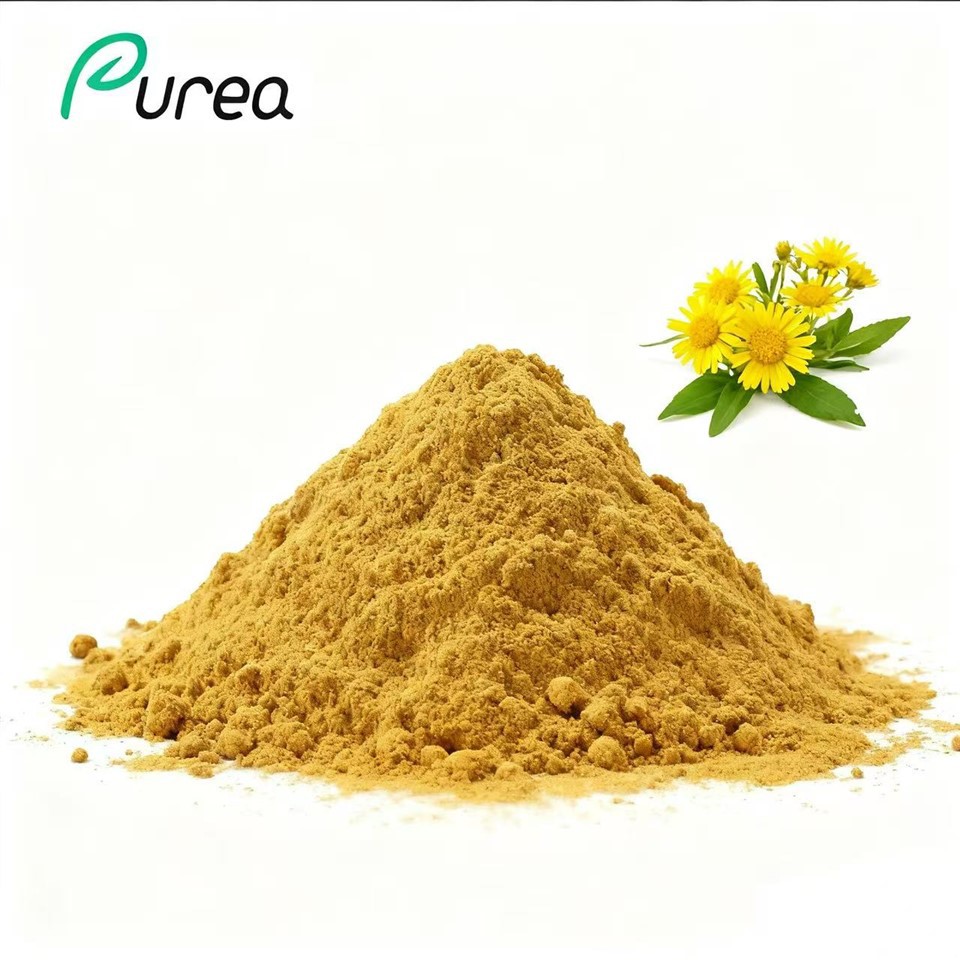
Arnica Montana Flower Extract Powder is a botanical ingredient derived from the flowers of Arnica montana, a plant belonging to the Asteraceae family. Available in 10:1 and 20:1 extract ratios, it is supplied as a fine brown to yellow-brown powder for use in selected topical and personal-care formulations. Its botanical origin, extract ratio, and physical specifications provide a basis for raw-material selection and formulation evaluation.
Product Specifications
|
Specification |
Details |
|
Product Name |
Arnica Montana Flower Extract Powder |
|
Botanical Name |
Arnica montana |
|
Plant Part |
Flower |
|
Form |
Fine powder |
|
Extract Ratio |
10:1, 20:1 |
|
Appearance |
Brown to yellow-brown powder |
|
Odor |
Characteristic |
|
Particle Size |
100% pass 80 mesh |
|
Loss on Drying |
≤5.0% |
|
Total Ash |
≤5.0% |
|
Solvent Residue |
None detected according to the referenced specification |
|
Heavy Metals |
Controlled according to applicable specification |
|
Microbiological Control |
Controlled according to applicable specification |
|
Standard Packaging |
1 kg bags / 25 kg drums |
|
Shelf Life |
2 years under recommended storage conditions |
Botanical & Extract Profile
The botanical identity and extraction ratio help define the ingredient's composition and provide reference points for procurement and formulation development.
Botanical Origin: Derived from the flowers of Arnica montana, the extract has a defined botanical source and plant part for raw-material identification.
Extract Ratio: Available in 10:1 and 20:1 specifications. The appropriate ratio depends on the intended formulation and the buyer's technical requirements.
Natural Constituents: Arnica flowers naturally contain sesquiterpene lactones, including helenalin-type compounds, as well as flavonoids and other botanical constituents. Their levels may vary with raw-material origin and extraction conditions.
Marker Specifications: Buyers requiring a particular constituent level should establish the target content and analytical method in the agreed product specification.
Formulation Applications
The powder format allows the extract to be evaluated for selected topical formulations. Application suitability depends on the finished product's composition, safety assessment, and applicable regulations.
Creams, Lotions & Gels: Suitable for evaluation in selected topical systems. Dispersion, color, odor, and compatibility with the base should be assessed during formulation development.
Massage Balms & Salves: Can be considered for botanical massage products and balm formulations, subject to ingredient compatibility and finished-product evaluation.
Botanical Skincare: May be evaluated for selected topical skincare products, including masks and other botanical formulations. The appropriate concentration and processing conditions depend on the finished product.
Arnica preparations are generally intended for external use. Formulators should assess product safety and verify the applicable regulatory requirements before commercializing finished products.
OEM & Specification Customization
Bulk procurement requirements can be defined around the extract's technical specifications, packaging, and quality acceptance criteria.
|
Customizable Item |
Available Direction |
Procurement Value |
|
Extract Ratio |
10:1, 20:1, or other agreed ratios where available |
Aligns the ingredient specification with formulation requirements |
|
Particle Size |
Standard 80 mesh or other agreed specifications where available |
Supports powder handling and blending requirements |
|
Packaging |
1 kg bags, 25 kg drums, or agreed packaging formats |
Accommodates different purchasing and production needs |
|
Testing Specification |
Agreed physical, chemical, contaminant, and microbiological parameters |
Establishes clear batch acceptance criteria |
Quality Assurance
Quality evaluation focuses on botanical identity, physical properties, and compliance with the agreed product specification.
Physical & Chemical Testing
Appearance, odor, particle size, loss on drying, and total ash can be assessed against the applicable specification. Additional analytical requirements should be confirmed for each project.
Contaminant Control
Heavy metals and relevant microbiological parameters are subject to the applicable product specification. Additional contaminant testing should be defined according to procurement and destination-market requirements.
Batch Documentation
A batch-specific Certificate of Analysis (COA) provides analytical results for comparison with the agreed specification. Buyers should confirm the available test items and methods before procurement.
Quality & Compliance Documents
Relevant quality or regulatory documents can be discussed according to the product and market requirements. Specific certifications should be confirmed before being included in purchasing agreements.
Packaging, Storage & Logistics
Packaging Options: Standard packaging includes 1 kg bags and 25 kg drums. Alternative packaging can be discussed according to order quantity and handling requirements.
Storage Conditions: Store in a tightly sealed container in a cool, dry place, away from direct sunlight and excessive heat. Protect the powder from moisture during storage and handling.
Shelf Life & Transportation: The referenced shelf life is 2 years under recommended storage conditions. Bulk shipments should be handled in suitable packaging to protect the powder during transportation.
FAQ
Q: What is the difference between 10:1 and 20:1 Arnica Montana Extract Powder?
A: The ratios indicate the relationship between the starting botanical material and the resulting extract. The appropriate option depends on the intended formulation, technical requirements, and target cost. Buyers should confirm the specific extract ratio and supporting product documentation before ordering.
Q: Which botanical constituents are present in Arnica Montana Flower Extract Powder?
A: Arnica flowers naturally contain sesquiterpene lactones, including helenalin-type compounds, along with flavonoids and other botanical constituents. The actual composition depends on the raw material and extraction process. Buyers requiring specific constituent levels should define the relevant analytical requirements in advance.
Q: Can Arnica Montana Flower Extract Powder be used in skincare formulations?
A: The powder can be evaluated for selected external-use formulations, including creams, lotions, gels, and balms. Its suitability depends on formulation compatibility, safety assessment, intended use, and applicable regulations.
Q: What quality parameters should buyers check before purchasing?
A: Buyers should review botanical identity, extract ratio, appearance, particle size, loss on drying, total ash, and applicable contaminant and microbiological specifications. Batch-specific analytical results should be compared with the agreed acceptance criteria.
Q: Can buyers request a customized extract specification?
A: The available customization options include extract ratio, particle size, packaging, and agreed testing requirements, subject to technical availability. Buyers should provide their requirements in advance so that the applicable specifications can be reviewed.
Q: What documents should be requested when purchasing in bulk?
A: A batch-specific COA is an important document for checking analytical results against the approved specification. Buyers may also request a product specification sheet and applicable quality or regulatory documents, subject to availability and the requirements of the destination market.
Hot Tags: arnica montana flower extract powder, China arnica montana flower extract powder manufacturers, suppliers, factory, Arnica Montana Flower Extract Powder, Saw Palmetto Oil Extract Powder, Gromwell Root Extract Powder, Glehnia Root Extract Powder, Organic Pandan Leaf Powder, natural animal plant extracts